The name InterCity first appeared as a brand name in 1966 and was used by British Rail to brand their long-distance...

Cart 0 Product Products (empty)
No products
Free shipping! Shipping
£ 0.00 Total
Product successfully added to your shopping cart
Quantity
Total
There are 0 items in your cart. There is 1 item in your cart.
Total products (tax incl.)
Total shipping (tax excl.) Free shipping!
Total (tax incl.)
Search Tips
Tips categories
Latest Tips
-
 When did the InterCity brand first appear?Read more
 -
 What colour should I use to paint brick walls?Read more
If you were painting a red brick wall, to get a realistic effect, I would, after the wall had been primed with a...
-
 What is G scale?Read more
G scale refers to a popular scale for outdoor and indoor garden railways. It is one of the larger scales used in...
-
 What is a Gibbet Crane?Read more
The term Gibbet is most commonly associated with the kind of gallows-like structure used to hang people, but thanks...
-
 Do I have to use the track mat that came with my train set?Read more
You do not have to use the track mat supplied with a starter set, ultimately, it's your layout and how you play with...

What colour should I use to paint brick walls?
If you were painting a red brick wall, to get a realistic effect, I would, after the wall had been primed with a suitable primer, paint each brick with a terracotta paint followed by a dry brushing with an orange colour and finally a light drybrush with white. Don't forget that bricks are not a uniform colour, so for best result you should use several close shades of terracotta colours.
If you want to make your bricks look old or hand made, add terracotta paint to primed brick surface, ensure full coverage of the brick then add a blob of terracotta paint and add a sprinkling of the dust from a broken terracotta flowerpot.
Take a shard of flowerpot and grind in to a fine power, with a pair of, break the pot in to smaller pieces until it is just dust and small fragments left, do this over a plastic tub and all the dust and fine pieces of terracotta can be retrieved and sprinkled. Don't forget those safety glasses when breaking shards of pot into dust.
I would recommend having the dust ready to go before adding the blob of paint.
As you add the blob of paint, sprinkle the dust into the paint, cover the whole brick area with a generous covering of dust, then when paint is dry, tip excess dust back into plastic tub for the next project using bricks.
I use the dust from flowerpots, different colour house bricks, concrete blocks. In short I use anything that may give more realism.
If you were painting grey house bricks, I would say it is the same as above, paint your primed brickwork a dark grey when dry add a light dry brushing of a lighter grey followed by a dry brushing of white.
Brick dust method is obviously optional.
Posted in: Painting
Click here to receive the tips weekly in your mailbox. You can unsubscribe at any time.
Related products


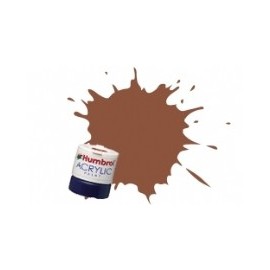
DISC***No 70 Brick Red - Matt -12ml Acrylic
Price: £ 1.80No 70 Brick Red - Matt -12ml AcrylicA water-based, fast-dry paint developed...
Related posts
-
 Do I need to use a primer?For best results it is advisable to use a primer as this will stick to the plastic and give a uniform coat of paint...
 - What is weathering?Weathering is a painting technique used by modellers to create the appearance of dirt and grime and even damage to...
- How do I clean brushes used with enamel paint?Enamel paint is solvent based, so trying to wash in water will not work, you need to use white spirit. It is...
- How do I fill holes in a model?There are many products on the market for filling holes: There are plastic putties straight out of the tube, there...
- What is the best size paintbrush?This would depend on what you are painting as paint brushes come in various shapes and sizes. I would say for...