There are many reasons why model trains derail, sometimes it's a track fault, sometimes it's because the train isn't...

Cart 0 Product Products (empty)
No products
Free shipping! Shipping
£ 0.00 Total
Product successfully added to your shopping cart
Quantity
Total
There are 0 items in your cart. There is 1 item in your cart.
Total products (tax incl.)
Total shipping (tax excl.) Free shipping!
Total (tax incl.)
Search Tips
Tips categories
Latest Tips
-
 Why does my train keep derailing?Read more
 -
 Should I use a brush to apply varnish?Read more
When applying varnish to protect a model's paintwork, you should aim for a finish that exhibits the least amount of...
-
 What is balsa glue and how do I use it?Read more
Balsa glue is a specialised adhesive designed specifically for bonding balsa wood. It's often the preferred choice...
-
 What is Hornby Dublo?Read more
Hornby Dublo was an early brand name for models produced by the company that we now all know as Hornby. The brand was...
-
 What are the filler caps for on the running board of a Jubilee Class?Read more
Railway modellers love details, but sometimes a prototype's details can leave us scratching our heads and wondering...

How can I best place delicate parts such as phot-etch items on my model ?
When it comes to scale modelling, placing delicate parts such as photo-etch and other small items requires patience, precision, and the right tools.
Here are some steps to help you safely and accurately place these fragile components on your model :
- Prepare your workspace : start by ensuring you have a clean and well-lit workspace. A clutter-free area will minimize the chances of losing or damaging small parts. Working with photo-etch can be visually challenging and tiring on the eyes, so it is highly advisable that the working area is well lit and that the modeller utilises magnifying lenses or headwear to assist.
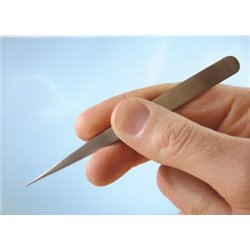
- Use the right tools : to handle delicate parts, it's crucial to have the right tools at your disposal. Certain tools have been designed specifically for handling photo-etch and other delicate items, such as the 'Gentle Grips' by Woodland Scenics and the 'Pick and place double ended tool' by Expotools. These items allow a modeller to grip delicate items without damaging them and place them precisely.
- Prepare the parts : before attempting to place delicate parts, it's a good idea to clean them. Use a soft brush or a cotton swab dipped in isopropyl alcohol to remove any dirt, grease, or fingerprints. This step ensures a better bond between the part and the surface.
- Use a temporary adhesive : applying a small amount of temporary adhesive can make the placement process easier. This adhesive will hold the part in place temporarily, allowing you to adjust its position before applying a permanent adhesive. Products like Blu Tack, poster putty work or masking tape work well for this purpose. Apply a tiny amount to the back of the part or to the surface where it will be placed to help alignment and placement.
- Positioning the part : with the temporary adhesive in place, use a positioning tool to carefully place the delicate part on the model. This stage will reward a slow but methodical approach. Once satisfied with the placement, gentle pressure can be applied to the part if necessary to help ensure the ideal position is achieved.
- Applying a permanent adhesive : after positioning the part, it's time to apply a permanent adhesive. Depending on the type of part and the surface it will be attached to, cyanoacrylate (super glue) maybe the most effective adhesive, although epoxy and PVA glue may also be effective. Apply a small amount of adhesive using a toothpick or a micro brush, taking care not to apply too much and risk excess glue seeping out.
- Finishing touches : once the adhesive has dried, carefully remove any excess temporary adhesive or glue residue using a soft brush or a cotton swab dipped in isopropyl alcohol. Time and diligence taken at this stage will help to ensure a clean and polished final result.
Adopting a careful and methodical process with the appropriate tools will enable a modeller to gain the experience to work confidently and effectively with photo-etch and other delicate parts, allowing them to further develop their modelmaking skills.
Posted in: Decals / Transfers
Click here to receive the tips weekly in your mailbox. You can unsubscribe at any time.
Related products
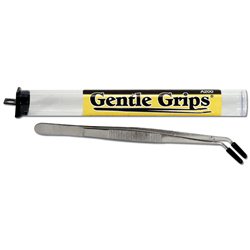
Scenic Accents Gentle Grips
Price: £ 11.50Scenic Accents Gentle GripsFinely hand-painted figures, ideal to bring life...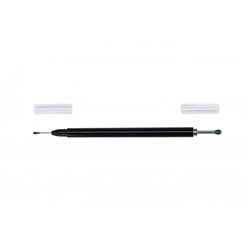
Related posts
-
 Do I need to varnish after applying a decal?The simple answer is yes, it is advisable to varnish your decal, for a couple of reasons One being that if the model...
 - How do I apply decals to irregular surfaces?This is not as difficult as you would think. Normally you would dip your transfer in warm water to help remove it...
- How do I use Micro sol and Micro set with waterslide decals (transfers)?When you are at the final stages of making your model, apply a coat of gloss varnish this will give a nice smooth...
- Do I need to varnish before applying a decal?It is a good idea to give your model a coat of gloss varnish before applying decals as this helps with the gluing...
- Can you just varnish where you intend to place the decals?It is best to varnish the whole model. By coating the whole model in varnish, you are guaranteed a uniform finish...