If you're lucky enough to know a lot about models and have experience painting them, how much the paint costs, is...

Cart 0 Product Products (empty)
No products
Free shipping! Shipping
£ 0.00 Total
Product successfully added to your shopping cart
Quantity
Total
There are 0 items in your cart. There is 1 item in your cart.
Total products (tax incl.)
Total shipping (tax excl.) Free shipping!
Total (tax incl.)
Search Tips
Tips categories
Latest Tips
-
 How much is paint for a model?Read more
 -
 Can I use OO figures with OO9 trains?Read more
You can use OO figures with OO9 trains as OO9 is OO narrow-gauge track. It means the track has a width of 9mm rather...
-
 What is P4 (Protofour)?Read more
P4 (also known as Protofour) is as true to the scale of 4mm to 1ft (1/76 scale) as you can get, giving a true...
-
 How do you apply decals to a curved surface?Read more
Most model kits will come with decals to help the modeller to add that final level of detail to a kit. Additionally,...
-
 Can I mix set track and flexible track?Read more
There is no problem mixing flexible and set track together you could even mix different manufacturers as well. They...

What is the maximum voltage for OO scale and N gauge track?
For an analogue system, the maximum voltage supported by the engines is about 12V.
Most analogue controllers will deliver a bit more but constantly running your engines with 13V or even 14V may damage their motors (and does not look very realistic).
On DCC systems, the voltage on the track is constantly about 16V AC.
Click here to receive the tips weekly in your mailbox. You can unsubscribe at any time.
Related products
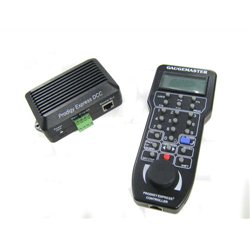
Prodigy Express Starter Package
Price: £ 315.00DCC controller - Prodigy Express Package Comprising of a Base Station,...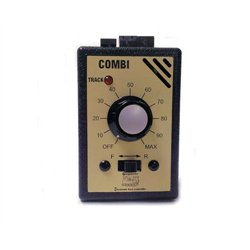
Single Track Controller with Plug in Transformer
Price: £ 67.00Gaugemaster Combi Controller - Plug in TransformerThis unit is sold without a...
Related posts
-
 Do I need a respirator?If you are using an aerosol spray paint you should always use one. Always read the manufacturer’s...
 - How to remove super glue (cyanoacrylate)?Cyanoacrylate is best known as super glue. The best way to remove it is with acetone or an acetone-based product...
- What is the best wood for baseboards?The most common wood for baseboards is probably chipboard as this is relatively inexpensive. Plywood is another...
- How do I stick parts together for a test fit?There are several trains of thought on the best way to secure parts together temporarily. Some suggest using a small...
- How to clean model railways track?There is of course the old tried and tested method, the track rubber which does the job, no railway modeller should...