When gluing parts, it is best to hold them in place especially if it is a large area you need to join together, such...

Cart 0 Product Products (empty)
No products
Free shipping! Shipping
£ 0.00 Total
Product successfully added to your shopping cart
Quantity
Total
There are 0 items in your cart. There is 1 item in your cart.
Total products (tax incl.)
Total shipping (tax excl.) Free shipping!
Total (tax incl.)
Search Tips
Tips categories
Latest Tips
-
 How can I keep parts in place during gluing?Read more
 -
 What was the Bachmann 'Blue Riband' subbrand ?Read more
The Blue Riband subbrand was a significant step in the evolution of Bachmann Branchline, the UK division of Bachmann...
-
 What is a Weekend Edition model plane kit?Read more
'Weekend Edition' plastic model plane kits are a type of kit offered by plastic kit manufacturer Eduard alongside...
-
 What is a good age for a child's first layout?Read more
Several factors will influence the age at which your child is ready for their first layout. These include the...
-
 What is the best wood for baseboards?Read more
The most common wood for baseboards is probably chipboard as this is relatively inexpensive. Plywood is another...

How do I make rivets?
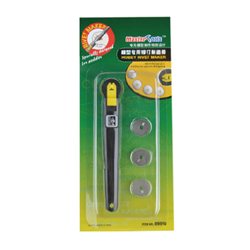
You can buy packs of plastic rivets in several sizes. There is also the rivet maker from Trumpeter which is able to create different sizes.
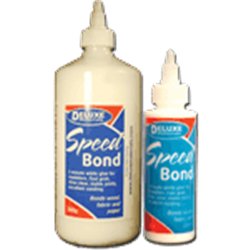
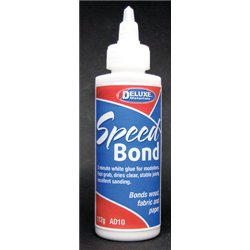
If you want a DIY solution, you can make your own with PVA glue:
You will need a nice piece of scrap plastic, a blob of PVA glue and a cocktail stick / toothpick. Dip your stick in to the blob of glue and place it on the scrap of plastic create a line of mini blobs of glue which are going to be your rivets. If you want them to be bigger, wait until the glue has gone off and then add some more on top. When they are dry, you can just pick them off as required.
If you plan on making a lot I would suggest getting yourself a baking tray from the pound shop as this makes the perfect surface for creating rows of rivets.
The baking tray has many other uses in the world of modelling: I use mine for applying paint pigments, weathering pigments, and even making static grass tufts.
Click here to receive the tips weekly in your mailbox. You can unsubscribe at any time.
Related products
Related posts
-
 Do I need to wash my plastic kit?I personally wash all my plastic kits, I use warm soapy water (Washing up liquid) and a light rub over with a nail...
 - Do I need to paint my base boards?I would recommend painting your base board for two reasons: The first being it will seal the base board and prevent...
- What is Milliput?Milliput is a two-part epoxy putty. There are two different colour rolls in a box when these are mixed together it...
- What modelling tools do I need to get started?Most modellers have an extensive tool kit, a tool for every eventuality. But when first starting a scalpel or a...
- How do I remove parts from the sprue?The short answer is carefully. The best way is with a sprue and plastic cutter but always be mindful of exactly...