If you are using small pots of game paint, it is fine to give it a good stir and use straight from the pot. However...

Cart 0 Product Products (empty)
No products
Free shipping! Shipping
£ 0.00 Total
Product successfully added to your shopping cart
Quantity
Total
There are 0 items in your cart. There is 1 item in your cart.
Total products (tax incl.)
Total shipping (tax excl.) Free shipping!
Total (tax incl.)
Search Tips
Tips categories
Latest Tips
-
 Should I use a palette for painting?Read more
 -
 What is CNC?Read more
CNC (Computer Numerical Control) is a manufacturing process that uses computer-controlled machines to cut, engrave or...
-
 Can Corgi or Matchbox style vehicles be used on a OO gauge layout?Read more
To better answer this question it is probably best to establish a working scale for any comparison. The reason for...
-
 What is Route Availability?Read more
The route availability of a real-life locomotive is another way of saying which tracks an engine is permitted to...
-
 How did train drivers read semaphore signals at night?Read more
Semaphore signals were a common form of railway signalling before the advent of modern electronic signals. During the...

What is a tunnel liner?
A tunnel liner is a sheet of scale brickwork, often moulded for detail and constructed from plastic, used to represent the internal wall of a model railway tunnel.
Tunnel liners are designed to fit onto a special lip on the back of most tunnel portals for a gap-free join. The lip also helps you to form a near-perfect shape for the inside of your tunnel. Not all modellers opt to use liners depending on the type of tunnel they're modelling, so not all portals have the lip and you will need to check for this when choosing a portal.
The interior wall of a tunnel can be fashioned by printing your own brickwork onto a piece of card and attaching it to your portal in the same way, but this method can look a little flat and shiny especially if you operate any locomotives with working headlights. The embossed brick pattern of a purpose-made tunnel liner will avoid this problem and add a great deal of realism to your tunnel scene.
Click here to receive the tips weekly in your mailbox. You can unsubscribe at any time.
Related products
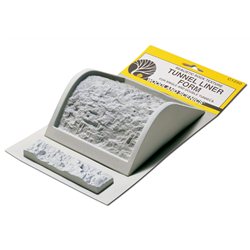
Rock Mould-Tunnel Liner
Price: £ 7.75This innovative mould is ideal for casting realistic rock walls and ceilings...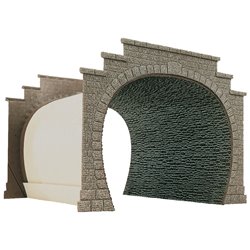
OO/HO Tunnel Lining Material
Price: £ 9.25OO/HO Tunnel Lining Material Decor sheet for tunnels. Tunnel portals not...
Related posts
-
 Do I need to wash my plastic kit?I personally wash all my plastic kits, I use warm soapy water (Washing up liquid) and a light rub over with a nail...
 - What is Milliput?Milliput is a two-part epoxy putty. There are two different colour rolls in a box when these are mixed together it...
- What modelling tools do I need to get started?Most modellers have an extensive tool kit, a tool for every eventuality. But when first starting a scalpel or a...
- How do I remove parts from the sprue?The short answer is carefully. The best way is with a sprue and plastic cutter but always be mindful of exactly...
- Do I need a cutting mat?It is not essential to have a cutting mat, but it is a good idea. It saves getting in trouble with your significant...