Yes, it is highly recommended that modellers should use a surge protector on their DCC layouts. This is because all...

Cart 0 Product Products (empty)
No products
Free shipping! Shipping
£ 0.00 Total
Product successfully added to your shopping cart
Quantity
Total
There are 0 items in your cart. There is 1 item in your cart.
Total products (tax incl.)
Total shipping (tax excl.) Free shipping!
Total (tax incl.)
Search Tips
Tips categories
Latest Tips
-
 Do I need to use a Surge Protector on my DCC layout?Read more
 -
 Are there any liquid track cleaners and how do they work?Read more
There are a number of products available to the modeller for keeping tracks clean and in tip-top condition. Perhaps...
-
 How do I paint metallic effects without an airbrush?Read more
To paint metallic effects without an airbrush, follow these steps:Use High-Quality Metallic PaintsOpt for...
-
 Which model buildings are best, card or plastic?Read more
When building a model railway layout, or any diorama for that matter, you will most likely want to place at least a...
-
 What is the recommended platform length for a model railway station ?Read more
When it comes to determining the platform length for a model railway station, there are a few factors to consider....

Are LED lights better than grain of wheat bulbs?
Grain of wheat bulbs are filament based so run hot. This means in certain situation, they have a habit of melting plastic which is not good for buildings or control panels that are made of plastic. They require 6 to 12 volts to run.
On the other hand, LED lights run cold, are easier to fit, last a lot longer and run on a low voltage of 1 to 2 volts. The downside of LED lights is they can be on a bit harsh on the eyes. They do not look as natural as traditional bulbs so they are difficult to use to mimic gas lamps or even lights from the 1960s.
Regarding the voltage, 12V is usually available from the controller on a model railway layout so grain of wheat bulbs can easily be fitted. With LED, resistors and possibly another power supply may have to be used.
Click here to receive the tips weekly in your mailbox. You can unsubscribe at any time.
Related products
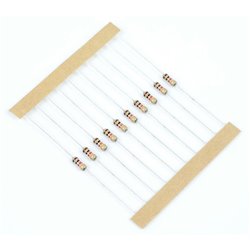
Resistors 1k Ohm for LEDs (Pack of 10)
Price: £ 2.40Resistor 1K Ohm for LEDs (Pack of 10) Our range of electrical "bits and bobs"...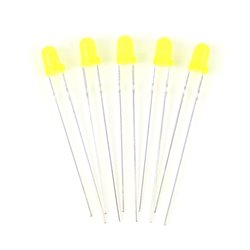
Yellow 3mm 12v LEDs (5) - Use GM76 Resistors
Price: £ 4.20LED Yellow 3mm (Pack of 5) 12vPack of 5 light emitting diodes. Use with GM76...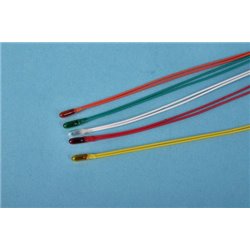
Clear 12v Grain of Wheat Bulbs (5)
Price: £ 6.75Grain of Wheat Bulb 12v Clear (Pack of 5) Scale / Type: Z / N / TT / HO / OO...
Related posts
-
 Do I need a respirator?If you are using an aerosol spray paint you should always use one. Always read the manufacturer’s...
 - How to remove super glue (cyanoacrylate)?Cyanoacrylate is best known as super glue. The best way to remove it is with acetone or an acetone-based product...
- What is the best wood for baseboards?The most common wood for baseboards is probably chipboard as this is relatively inexpensive. Plywood is another...
- How do I stick parts together for a test fit?There are several trains of thought on the best way to secure parts together temporarily. Some suggest using a small...
- How to clean model railways track?There is of course the old tried and tested method, the track rubber which does the job, no railway modeller should...