A boxfile layout is a creative and compact way to build a model railway within the confines of a standard box file,...

Cart 0 Product Products (empty)
No products
Free shipping! Shipping
£ 0.00 Total
Product successfully added to your shopping cart
Quantity
Total
There are 0 items in your cart. There is 1 item in your cart.
Total products (tax incl.)
Total shipping (tax excl.) Free shipping!
Total (tax incl.)
Search Tips
Tips categories
Latest Tips
-
 What is a boxfile layout?Read more
 -
 In model railways, what does digital mean?Read more
The word 'digital' when used in model railways usually refers to a model or product being specifically manufactured...
-
 What is a Thompson bogie?Read more
Thompson bogies were the metal framework and suspension units that housed the wheelsets on Thompson railway coaches....
-
 How do you design a track plan?Read more
There are several different ways to design a track plan for your model railway project. There is no right or wrong...
-
 How to connect power across mobile baseboard section?Read more
There are a number of reasons modellers will need to create a layout in sections, some may desire a transportable...

What is feedback on an analogue controller?
Feedback on an analogue controller is a function that detects if your model train is experiencing difficulty climbing a gradient or struggling due to voltage drop, the controller then automatically applies more power to counteract the effects.
It works by detecting the reverse EMF generated by a model's motor when it's under strain and applying more power to compensate. When the strain is no longer present, less reverse EMF is produced and the controller reduces power to match ensuring that the model's speed remains constant. It's a bit like having cruise control for your model train!
Click here to receive the tips weekly in your mailbox. You can unsubscribe at any time.
Related products
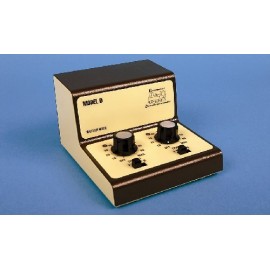
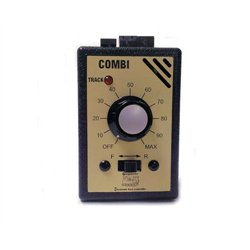
Single Track Controller with Plug in Transformer
Price: £ 67.00Gaugemaster Combi Controller - Plug in TransformerThis unit is sold without a...
Four Track Cased Controller
Price: £ 315.00
Related posts
-
 What scale is Hornby?Hornby model railways are OO Scale or 1/76th that is 4 millimetres to the foot (12 inches). It runs on a track with...
 - How to weight my model so it does not tip?For wargaming figures, a small coin or washer glued to the under side of the base will usually to do the job. This...
- Is Bachmann compatible with Hornby?Yes, any OO scale loco, wagon or coach will work on any OO scale track, regardless of brand. Couplings are also...
- What are the model railway eras?According to Bachmann, as it states in their catalogue there are 9 eras. As they say in their catalogue this is not...
- Can a "DCC ready" train be used on analogue?Yes, you can use a DCC ready train on your analogue layout. DCC ready just means that the train has been factory...