The Big Four is a collective term used to describe the four main railway companies that operated the railways between...

Cart 0 Product Products (empty)
No products
Free shipping! Shipping
£ 0.00 Total
Product successfully added to your shopping cart
Quantity
Total
There are 0 items in your cart. There is 1 item in your cart.
Total products (tax incl.)
Total shipping (tax excl.) Free shipping!
Total (tax incl.)
Search Tips
Tips categories
Latest Tips
-
 What are the Big Four in railways?Read more
 -
 What are my options for modelling deciduous trees in winter?Read more
There are a number of options available to Modellers when it comes to modelling deciduous trees in winter for a...
-
 What colour are railway rails?Read more
In the early days, railway tracks were made from iron, but cast iron was considered to be too brittle and wrought...
-
 What is the purpose of ballast?Read more
Ballast is an essential component in railway construction, serving several crucial functions in maintaining the...
-
 How can I safely remove ejector pin marks from model parts without damaging them?Read more
Ejector pin marks are distinctive, consistently sized circular effects that can appear on the surface of model parts....

What are the Big Four in railways?
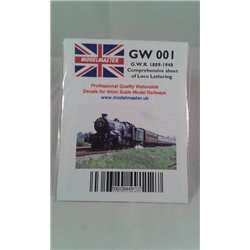
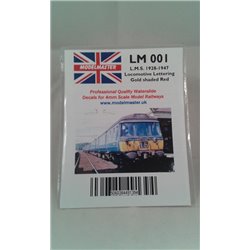
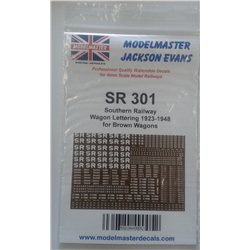
The Big Four is a collective term used to describe the four main railway companies that operated the railways between 1923 and 1947, these are the LNER (London & North Eastern Railway), the LMS (London Midland and Scottish railway), SR (Southern Railway) and the GWR (Great Western Railway).
Before 1923 the railways had been made up of over 120 different railway companies. The competition was so great that many were loss-making, a situation that was only compounded by the Great War of 1914-1918. Eventually, in 1921 the government stepped in to avoid the collapse of the industry. Because the government had already taken control of the railways during the war years they could clearly see the benefits of a centrally run network. Many options were put forward and considered including nationalisation, but in the end, it was felt that the railways would achieve better results under private ownership and after much debate as to the degree of amalgamation required and consequently, numerous papers rejected, it was agreed that the railways should be grouped into just four main companies. The grouping (as it has become known) took effect on the 1st January 1923.
The railways remained under the operation of the Big Four until nationalisation in 1948 when most forms of transport in Britain were brought under government control.
Posted in: Model Railway
Click here to receive the tips weekly in your mailbox. You can unsubscribe at any time.
Related products
Related posts
-
 What scale is Hornby?Hornby model railways are OO Scale or 1/76th that is 4 millimetres to the foot (12 inches). It runs on a track with...
 - How to weight my model so it does not tip?For wargaming figures, a small coin or washer glued to the under side of the base will usually to do the job. This...
- Is Bachmann compatible with Hornby?Yes, any OO scale loco, wagon or coach will work on any OO scale track, regardless of brand. Couplings are also...
- What are the model railway eras?According to Bachmann, as it states in their catalogue there are 9 eras. As they say in their catalogue this is not...
- Can a "DCC ready" train be used on analogue?Yes, you can use a DCC ready train on your analogue layout. DCC ready just means that the train has been factory...