By the early 20th century, the railways had grown to such an extent that competition was fierce and the market was...

Cart 0 Product Products (empty)
No products
Free shipping! Shipping
£ 0.00 Total
Product successfully added to your shopping cart
Quantity
Total
There are 0 items in your cart. There is 1 item in your cart.
Total products (tax incl.)
Total shipping (tax excl.) Free shipping!
Total (tax incl.)
Search Tips
Tips categories
Latest Tips
-
 Why were the railways grouped?Read more
 -
 What is a laser-cut kit?Read more
A laser-cut kit is a regular kit that is put together the same way as any ordinary kit, and it's made from the same...
-
 What are Vacuform model kits ?Read more
Vacuform model kits (sometimes called vacform kits or simply vac kits) are a type of scale model kit that is made...
-
 What does flux do for soldering? in layman's terms!Read more
Most modellers know that flux should be used to make better soldering joins, however, too many articles on the...
-
 Should I position signals at the entrances of any tunnels on my layout?Read more
Yes, it is a good idea to position signals at the entrances of tunnels on a layout. Signals play a crucial role in...

Is acrylic paint safer than enamel paint?
Acrylic paint is, without doubt, safer than enamel. This is because it is water-based so doesn't emit toxic fumes that you can breathe in unlike enamel which is solvent-based with lots of nasty neurotoxins in its ingredients.
Safer does not mean 100% safe though. Paint is not something that our bodies are designed to inhale or ingest so common sense should prevail.
It is highly unlikely that anyone would use acrylic paint as an ingredient for a delicious cocktail, but there are times when dealing with acrylic paint that we should exercise caution.
When sanding old paint acrylic or otherwise, you should always do so in a well-ventilated room and wear a face mask. The respirator type is best because paper masks cannot guarantee toxins will not penetrate into your air supply. Although the acrylic paint doesn't contain toxins there is always the substance underneath the paint to consider along with the paint particles themselves which do not sit well on the lungs.
Also worth considering is protecting your skin from paint, in general, you shouldn't suffer any great side effects from a little paint splash on your skin, but with allergies on the increase, it is better to be safe than sorry so wearing gloves is advisable.
When used properly, with adequate safety precautions any paint is safe to use, so you shouldn't let the subject of safety influence your decision about which kind of paint you should choose, but at the same time, we can't emphasize enough that any safety instruction on any paint should be followed and not be taken lightly.
Posted in: Painting
Click here to receive the tips weekly in your mailbox. You can unsubscribe at any time.
Related products
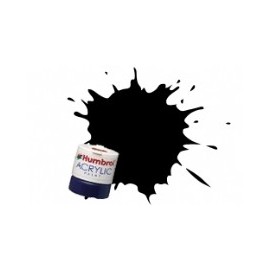
DISC***No 33 Black - Matt -12ml Acrylic
Price: £ 1.80No 33 Black - Matt -12ml AcrylicA water-based, fast-dry paint developed for...
DISC***No 34 White - Matt -12ml Acrylic
Price: £ 1.80No 34 White - Matt -12ml AcrylicA water-based, fast-dry paint developed for...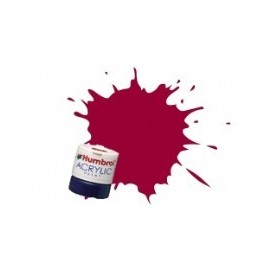
DISC***No 20 Crimson - Gloss Acrylic
Price: £ 1.80No 20 Crimson - GlossA water-based, fast-dry paint developed for use on...
Related posts
-
 Do I need to use a primer?For best results it is advisable to use a primer as this will stick to the plastic and give a uniform coat of paint...
 - What is weathering?Weathering is a painting technique used by modellers to create the appearance of dirt and grime and even damage to...
- How do I clean brushes used with enamel paint?Enamel paint is solvent based, so trying to wash in water will not work, you need to use white spirit. It is...
- How do I fill holes in a model?There are many products on the market for filling holes: There are plastic putties straight out of the tube, there...
- What is the best size paintbrush?This would depend on what you are painting as paint brushes come in various shapes and sizes. I would say for...