There are a number of products available to the modeller for keeping tracks clean and in tip-top condition. Perhaps...

Cart 0 Product Products (empty)
No products
Free shipping! Shipping
£ 0.00 Total
Product successfully added to your shopping cart
Quantity
Total
There are 0 items in your cart. There is 1 item in your cart.
Total products (tax incl.)
Total shipping (tax excl.) Free shipping!
Total (tax incl.)
Search Tips
Tips categories
Latest Tips
-
 Are there any liquid track cleaners and how do they work?Read more
 -
 Are NEM couplings better than traditional couplings?Read more
Have you ever wondered what NEM couplings are? We see the name mentioned all the time because they are supplied on...
-
 The Evolution of BR Wagon ClassificationRead more
Understanding the evolution of wagon classification from diagrams to design codes is a fascinating journey through...
-
 What is live steam?Read more
Live steam refers to miniature, working models of steam-powered vehicles, such as locomotives, boats, and stationary...
-
 Why won’t my engine run after adding a 6 pin DCC decoder?Read more
This is quite straight forward as there are no real instructions on fitting 6-pin decoder. If you find that your...

What coarseness of ballast should I use for my N gauge layout?
The best coarseness of ballast for N Gauge would be the fine or very fine ballast.
This gives a better scale representation for the N gauge layout.
If you were to use medium or coarse ballast, this would look out of proportion to everything else and be very noticeable.
Just imagine each stone of your ballast is 160 times smaller than the real thing in N gauge. If you measure a grain of model ballast at 1mm wide, this is equivalent to a real ballast stone 16cm wide. Quite large ballast indeed!
Click here to receive the tips weekly in your mailbox. You can unsubscribe at any time.
Related products
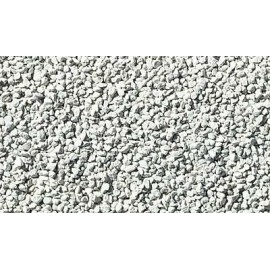
Gray Fine Ballast
Price: £ 2.95
Related posts
-
 Do I need to paint my base boards?I would recommend painting your base board for two reasons: The first being it will seal the base board and prevent...
 - Do I need a respirator?If you are using an aerosol spray paint you should always use one. Always read the manufacturer’s...
- How to remove super glue (cyanoacrylate)?Cyanoacrylate is best known as super glue. The best way to remove it is with acetone or an acetone-based product...
- How do I apply static grass?Static grass is best applied using a static grass applicator. There are several on the market and they can apply...
- What is a Diorama?A diorama is three-dimensional scene creating a moment in time, this could be a historical event or a fictional one,...