Solenoid point motors are used for throwing the points on your layout. They can also be used for other animations...

Cart 0 Product Products (empty)
No products
Free shipping! Shipping
£ 0.00 Total
Product successfully added to your shopping cart
Quantity
Total
There are 0 items in your cart. There is 1 item in your cart.
Total products (tax incl.)
Total shipping (tax excl.) Free shipping!
Total (tax incl.)
Search Tips
Tips categories
Latest Tips
-
 What are solenoid point motors?Read more
 -
 Can Dapol rolling stock couple to Graham Farish rolling stock?Read more
Modern Graham Farish and Dapol rolling stock should in theory couple together with little problem. This is thanks to...
-
 What is meant by the term 'kitbashing'?Read more
The term "kitbashing" refers to the practice of modifying or combining different model kits or components to create a...
-
 Who are the model manufacturer ICM and what do they specialize in ?Read more
ICM is a well-known model manufacturer that specializes in producing plastic scale models. They have been in the...
-
 What are flatbed wagons used for?Read more
Flatbed wagons, often referred to as flat wagons or flatcars, are railway freight vehicles designed with a flat, open...

How do I achieve smooth colour transitions by blending paint?
Achieving seamless colour blending is an essential skill that can elevate a model's realism and visual appeal. Mastering the art of blending allows you to create natural-looking transitions between hues, mimicking the way light and shadow interact with surfaces in the real world.
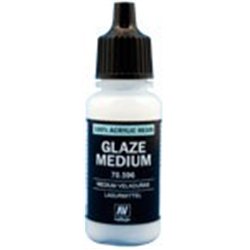
One effective technique for blending colours is the use of glazes. By thinning down paints with a glossy medium, you can create translucent layers that gradually blend one colour into another. This method is particularly useful to achieve subtle transitions on large surface areas, such as aircraft camouflage patterns or the gradual fading of colours on weathered vehicles.
Another approach you can take is the "feathering" technique, which involves carefully applying paint along the edges of contrasting colours and gently blending them together with a clean brush. This method is well-suited to create sharp yet seamless transitions, as often seen in the demarcation lines between colours on military aircraft or vehicles. If you are an experienced modeller, you may also incorporate advanced techniques like colour modulation, where multiple hues are blended together to simulate the interplay of light and shadow on curved surfaces.
Regardless of the chosen method, patience and a steady hand are essential when blending colours. Practising on scrap pieces can help you refine your brush control and develop an understanding of how different paints interact with each other. By mastering the art of blending, you can breathe life into your creations, transforming static replicas into realistic representations of the subject matter.
Posted in: Painting
Click here to receive the tips weekly in your mailbox. You can unsubscribe at any time.
Related products
Related posts
-
 Do I need to use a primer?For best results it is advisable to use a primer as this will stick to the plastic and give a uniform coat of paint...
 - What is weathering?Weathering is a painting technique used by modellers to create the appearance of dirt and grime and even damage to...
- How do I clean brushes used with enamel paint?Enamel paint is solvent based, so trying to wash in water will not work, you need to use white spirit. It is...
- How do I fill holes in a model?There are many products on the market for filling holes: There are plastic putties straight out of the tube, there...
- What is the best size paintbrush?This would depend on what you are painting as paint brushes come in various shapes and sizes. I would say for...