Facing point locks are commonly used throughout the world's rail systems, their function is to physically lock points...

Cart 0 Product Products (empty)
No products
Free shipping! Shipping
£ 0.00 Total
Product successfully added to your shopping cart
Quantity
Total
There are 0 items in your cart. There is 1 item in your cart.
Total products (tax incl.)
Total shipping (tax excl.) Free shipping!
Total (tax incl.)
Search Tips
Tips categories
Latest Tips
-
 What is a facing point lock in railways?Read more
 -
 How to weight my model so it does not tip?Read more
For wargaming figures, a small coin or washer glued to the under side of the base will usually to do the job. This...
-
 What types of track are available for N gauge?Read more
Whether you're planning your first layout in N gauge or thinking of making the switch from OO, you might be wondering...
-
 What is quartering in model railway?Read more
When modellers talk about quartering, they are referring to the side-rods on their locomotives being set to the...
-
 What is a DCC decoder?Read more
To understand what a DCC decoder does, we must first take a look at how DC and DCC work.DC stands for Direct...

What are the names and uses of the key components used to operate a steam locomotive?
Steam locomotives are fascinating machines that played a crucial role in the development of railways worldwide. In this guide, we will explore the various components of a steam locomotive and how they work together to produce the power needed to move trains. Whether a model railway enthusiast or simply curious about these historical marvels, this guide will provide the reader with a basic understanding of the key terms used to describe steam locomotives.
- Boiler : The boiler is the heart of a steam locomotive. It is a large, cylindrical vessel where water is heated to produce steam. The steam generated in the boiler is then used to power the locomotive. It is typically made of steel and is highly pressurised to withstand the intense heat and pressure created within the boiler.
- Firebox and fireman : The firebox is located at the rear of the boiler and is where the fuel, usually coal or oil, is burned. The fireman is responsible for maintaining the fire and ensuring a steady supply of fuel. The heat from the firebox heats the water in the boiler, creating steam.
- Chimney : The chimney, also known as the funnel or smokestack, is located on top of the boiler. Its primary function is to release the smoke and exhaust gases produced during the combustion process. The height and diameter of the smokestack are designed to create a draft, helping to pull the smoke up and away from the locomotive.
- Steam dome : The steam dome is a rounded, protruding structure on top of the boiler. It serves as a reservoir for the steam produced in the boiler. The steam dome allows for the separation of steam and water, ensuring that only dry steam is sent to the cylinders.
- Cylinders and pistons : The cylinders are where the steam's energy is converted into mechanical force. Steam enters the cylinders and pushes the pistons back and forth. The motion of the pistons is transferred to the locomotive's wheels, propelling it forward.
- Valve gear : The valve gear controls the admission and release of steam into the cylinders. It ensures that the steam enters the cylinders at the right time and in the correct direction, maximizing the locomotive's efficiency. There are various types of valve gear, including Stephenson, Walschaerts, and Baker.
- Wheels and driving rods : The locomotive's wheels, typically made of steel, are connected to the driving rods, also known as connecting rods. The motion of the pistons is transferred to the driving rods, which then turn the wheels, propelling the locomotive forward.
- Tender : The tender is a separate car attached to the rear of the steam locomotive. It carries the fuel, usually coal or oil and water needed to operate the locomotive. The tender also serves as a place for the crew to rest and store supplies.
- Cab and controls : The cab is the enclosed area where the crew operates the locomotive. It houses the controls, such as the throttle, brake and various gauges. The crew communicates with each other and monitors the locomotive's performance from the cab.
- Whistle : The whistle is a distinctive feature of steam locomotives. It is used to signal the locomotive's presence and communicate with other trains and railway personnel. The sound of a steam whistle can vary depending on the design and size of the locomotive.
Understanding the components of a steam locomotive is essential for anyone interested in model railways or the history of railways. By grasping how these components work together, it is possible to appreciate the engineering marvels that steam locomotives truly are.
Posted in: Rolling stock
Click here to receive the tips weekly in your mailbox. You can unsubscribe at any time.
Related products
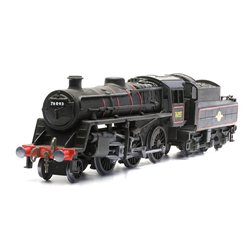
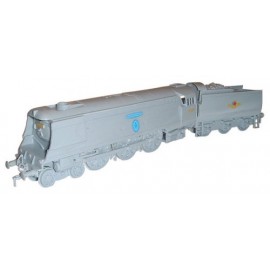
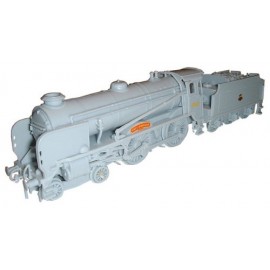
Schools Class-Kings Wimbledon (Dapol - Kitmaster)
Price: £ 15.20Schools Class-Kings Wimbledon, HO/OO scale
Related posts
-
 How to weight my model so it does not tip?For wargaming figures, a small coin or washer glued to the under side of the base will usually to do the job. This...
 - Is Bachmann compatible with Hornby?Yes, any OO scale loco, wagon or coach will work on any OO scale track, regardless of brand. Couplings are also...
- What are tension lock couplings?Tension lock couplings are the standard couplings for model trains in the UK. These are the ones we all know from...
- How do I test the width between the wheels of my engines?The best way to check the wheels of your locomotives is to use a tool called a back to back gauge. They are...
- How do I clean the wheels of my engine?One easy way is to get yourself a Peco cleaning kit containing a wire brush, wheel scraper, foam cradle and oil. The...