When it comes to hobby knives, the expensive part of the knife is often the bits surrounding the blade and not the...

Cart 0 Product Products (empty)
No products
Free shipping! Shipping
£ 0.00 Total
Product successfully added to your shopping cart
Quantity
Total
There are 0 items in your cart. There is 1 item in your cart.
Total products (tax incl.)
Total shipping (tax excl.) Free shipping!
Total (tax incl.)
Search Tips
Tips categories
Latest Tips
-
 Are cheap hobby knives any good?Read more
 -
 What are bolster wagons used for?Read more
The term 'Bolster Wagon' refers to a type of railway wagon specifically designed for the transportation of long and...
-
 How can I use IPA (Isopropyl Alcohol) to clean track?Read more
Cleaning your model railway tracks with IPA (Isopropyl Alcohol) is an effective method to remove dirt, grime, and...
-
 How do I clean brushes used with enamel paint?Read more
Enamel paint is solvent based, so trying to wash in water will not work, you need to use white spirit. It is...
-
 What is a reversing loop?Read more
A reversing loop is a railway track that splits at a turnout, the diverging track then makes its way around in a big...

What are bolster wagons used for?
The term 'Bolster Wagon' refers to a type of railway wagon specifically designed for the transportation of long and heavy loads. Bolster wagons feature a flat deck with a centrally positioned bolster, which is a long beam or platform extending across the width of the wagon.
The primary purpose of a bolster wagon is to provide support and stability for loads that exceed the length of a standard freight wagon. These loads typically include items such as steel girders, timber beams, pipes and other lengthy or bulky cargoes. The bolster is typically located in the middle of the wagon and serves as a secure resting place for the load, ensuring it remains balanced and preventing the load from overhanging the side of the wagon.
Bolster wagons often have specialized features to secure the cargo, such as chains, straps or ratchet systems. These mechanisms help to fasten the load firmly to the wagon, preventing shifting or displacement during transportation.
By utilizing bolster wagons, railways can efficiently transport elongated or heavy goods that cannot fit within the confines of regular wagons. This specialized type of wagon allows for the safe and secure carriage of oversized loads, enabling the transportation of construction materials, industrial equipment and other items that require a flat and stable surface for transport.
In summary, bolster wagons are designed for the specific purpose of transporting long and heavy loads, featuring a flat deck with a central bolster to provide support and stability. For a modeller, they represent a useful option in accurately depicting the diverse range of freight transportation seen on real-world railways.
Posted in: Rolling stock
Click here to receive the tips weekly in your mailbox. You can unsubscribe at any time.
Related products
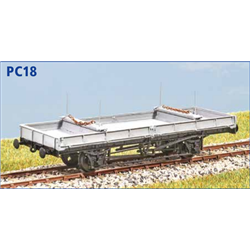
LNER 21t Twin Bolster 1943
Price: £ 16.30LNER 21t Twin Bolster 1943 - OO unpainted plastic kitComes with metal wheels....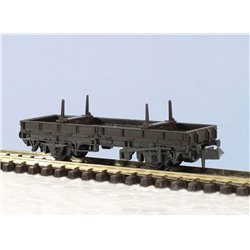
15ft wheelbase, Bolster Wagon.
Price: £ 8.9015ft wheelbase, Bolster Wagon.Unpainted plastic model kit easy to...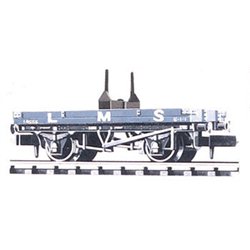
Bolster, Wagon LMS, Bauxite
Price: £ 21.50Bolster, Wagon LMS, BauxitePeco Quality Line Wagons. Fully painted, assembled...
Related posts
-
 How to weight my model so it does not tip?For wargaming figures, a small coin or washer glued to the under side of the base will usually to do the job. This...
 - Is Bachmann compatible with Hornby?Yes, any OO scale loco, wagon or coach will work on any OO scale track, regardless of brand. Couplings are also...
- What are tension lock couplings?Tension lock couplings are the standard couplings for model trains in the UK. These are the ones we all know from...
- How do I test the width between the wheels of my engines?The best way to check the wheels of your locomotives is to use a tool called a back to back gauge. They are...
- How do I clean the wheels of my engine?One easy way is to get yourself a Peco cleaning kit containing a wire brush, wheel scraper, foam cradle and oil. The...