A crossover is a railway track formation that allows a train to cross from one line to another.Crossovers are...

Cart 0 Product Products (empty)
No products
Free shipping! Shipping
£ 0.00 Total
Product successfully added to your shopping cart
Quantity
Total
There are 0 items in your cart. There is 1 item in your cart.
Total products (tax incl.)
Total shipping (tax excl.) Free shipping!
Total (tax incl.)
Search Tips
Tips categories
Latest Tips
-
 What is a railway crossover?Read more
 -
 Where should I position semaphore signals on my layout?Read more
Semaphore signals are an important part of any model railway layout as they help to control the movement of trains...
-
 Why was the British Railways late crest implemented?Read more
In 1955 an act commonly known as the 'Modernisation Plan' was passed with the intensions of modernising British...
-
 Which colour scatter should I use to represent autumn?Read more
If you think of the different seasons, autumn follows summer so therefore if the summer has been hot and there has...
-
 What is a stay-alive capacitor?Read more
A stay-alive capacitor (also known as a keep-alive) is a component that can be fitted to DCC model locomotives to...

What colour is ballast?
On the real railway line, the ballast would have come from a local quarry so the colour would reflect this. The colour will mostly epend on the type of stone common ones are limestone and granite, with colours varying from white to grey and brown.
The colour will also vary over time. Ballast that was laid a long time ago will be heavily weathered while freshly laid ballast will be more vibrant.
Some railways has specific customs such as the use of ash cinders (which would be black) in the NER region.
So as always, make sure you study the prototype if you want to be accurate.
Obviously, if you are just building a railway with no specific region in mind then the choice of colour is yours.
Click here to receive the tips weekly in your mailbox. You can unsubscribe at any time.
Related products
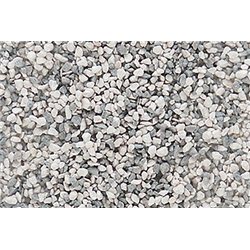
Grey Blend Fine Ballast shaker
Price: £ 16.50Realistically model railroad track, crushed rock and stones. Easy to use and...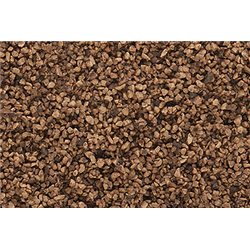
Brown Coarse Ballast
Price: £ 16.50Realistically model railroad track, crushed rock and stones. Easy to use and...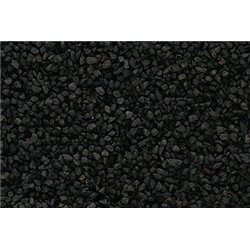
Cinders Medium Ballast
Price: £ 16.50Realistically model railroad track, crushed rock and stones. Easy to use and...
Related posts
-
 Is static grass better than scatter?I use both, separately and together. Static grass comes in various sizes from 0.5mm to 12mm while scatter is...
 - How do I apply static grass?Static grass is best applied using a static grass applicator. There are several on the market and they can apply...
- What colour are tree trunks?Tree trunks are actually grey in colour and not brown as you would think. The next time you are out and about just...
- How to make hills?You can make hills in a variety of ways. The tried and tested way is with chicken wire and papier mache. This is a...
- How do I glue scatter?Select the area where you want the scatter, then apply a layer of PVA glue, sprinkle your grass covering the glue....