T gauge is the smallest commercially available model railway gauge. It has a scale of either 1:450 or 1:480 and a...

Cart 0 Product Products (empty)
No products
Free shipping! Shipping
£ 0.00 Total
Product successfully added to your shopping cart
Quantity
Total
There are 0 items in your cart. There is 1 item in your cart.
Total products (tax incl.)
Total shipping (tax excl.) Free shipping!
Total (tax incl.)
Search Tips
Tips categories
Latest Tips
-
 What is T gauge in model railways?Read more
 -
 Should I cut tracks vertically or horizontally when using track cutters?Read more
If track cutters are your weapon of choice to cut model railway track with, you may be wondering which way they...
-
 Can I use water to thin acrylic paint?Read more
Yes, you can use water to thin acrylic paint as acrylic paint is a water-based paint. When you are using a brush to...
-
 How can I best cut masking tape into circles of a specific size?Read more
Cutting masking tape into circles of a specific size can be a bit tricky but there are a few methods that can make...
-
 Can you just varnish where you intend to place the decals?Read more
It is best to varnish the whole model. By coating the whole model in varnish, you are guaranteed a uniform finish...

What is meant by the term 'Banker Engine' and where would they be used ?
The term 'Banker Engine' refers to a locomotive that assists in pushing or pulling trains up steep gradients or inclines. These gradients are commonly referred to as "banks" in British railway terminology. Banker engines are utilized to provide additional power and traction to overcome the increased resistance faced by trains when ascending such inclines.
Banker engines are typically positioned at the rear or front of a train, depending on the specific railway layout and operational requirements. They work in conjunction with the primary locomotive, either by pushing the train from behind or by pulling it from the front. By doing so, the banker engine helps to maintain the necessary speed and prevent the train from stalling or losing momentum on the uphill sections of the track.
The use of banker engines is particularly prevalent in areas with challenging topography, such as hilly or mountainous regions. They play a crucial role in ensuring the efficient and reliable movement of trains, especially when dealing with heavy loads or long trains that would otherwise struggle to ascend steep gradients under their own power.
They are also known as helper engines and pusher engines in the USA and Canada.
Posted in: Model Railway
Click here to receive the tips weekly in your mailbox. You can unsubscribe at any time.
Related products
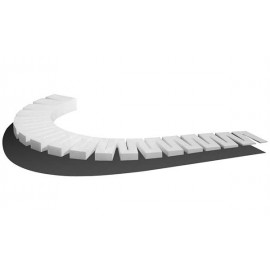
2% Incline/Decline Starters - pack of 8
Price: £ 15.00Totally flat areas of land are very rare in nature. They usually occur as...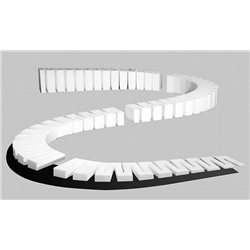
4% Foam Incline/Decline set - Pack of 4...
Price: £ 24.00Totally flat areas of land are very rare in nature. They usually occur as...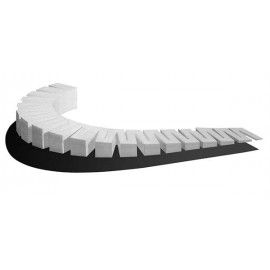
4% Incline/Decline Starters - pack of 4
Price: £ 15.00Totally flat areas of land are very rare in nature. They usually occur as...
Related posts
-
 What scale is Hornby?Hornby model railways are OO Scale or 1/76th that is 4 millimetres to the foot (12 inches). It runs on a track with...
 - How to weight my model so it does not tip?For wargaming figures, a small coin or washer glued to the under side of the base will usually to do the job. This...
- Is Bachmann compatible with Hornby?Yes, any OO scale loco, wagon or coach will work on any OO scale track, regardless of brand. Couplings are also...
- What are the model railway eras?According to Bachmann, as it states in their catalogue there are 9 eras. As they say in their catalogue this is not...
- Can a "DCC ready" train be used on analogue?Yes, you can use a DCC ready train on your analogue layout. DCC ready just means that the train has been factory...