Christmas and New Year
Due to public holidays, orders will be next dispatched on Monday 29th.
If you select next day delivery at checkout, please note deliveries are not made on New Year's Day or Sundays.
The shop in Sandown is closed on Saturday 27th December and will reopen on Tuesday 30th December.
Tuesday 30th: 10am to 4.30pm - Wednesday 31st: 10am to 2.30pm - Thursday 1st: closed - Friday onwards: 10am to 4.30pm.
More info
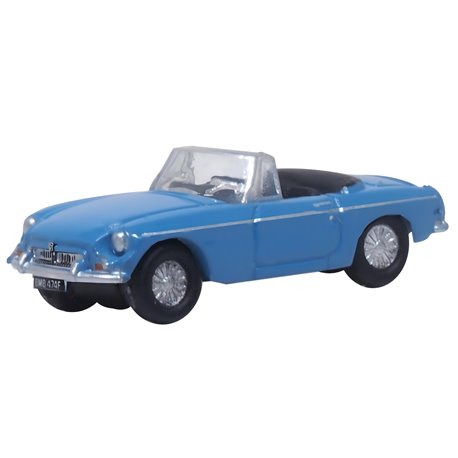
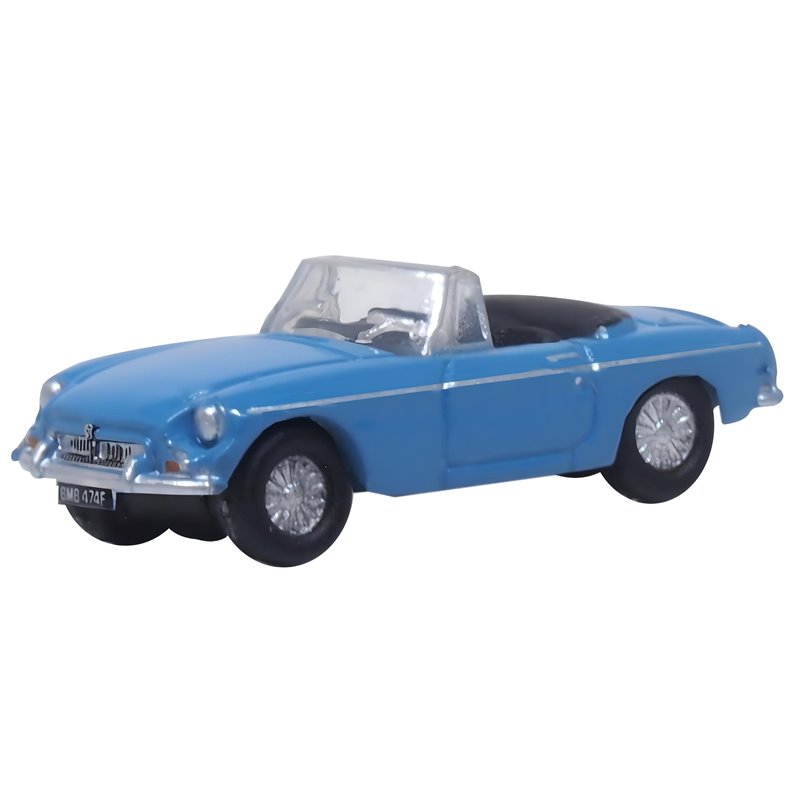
The MGB was introduced in 1962, with a 0-60 mph time of just over 11 seconds, aided by the relatively light weight of the car. Handling was one of the MGB's strong points. The 3-bearing 1798 cc B-Series engine produced 95 hp at 5,400 rpm. The engine was upgraded in October 1964 to a five-bearing crankshaft in an effort to improve reliability.
First models rolled off the production line in 1962 by the British Motor Corporation (BMC), later the Austin-Morris division of British Leyland, as a four-cylinder, soft-top sports car. It was announced and its details first published on 19 September 1962. Variants include the MGB GT three-door 2+2 coupé (1965–1980), the six-cylinder sports car and coupé MGC (1967–69), and the eight-cylinder 2+2 coupé, the MGB GT V8 (1973–76).
Development of the MGB started at least as early as 1958 with the prototype known by its Abingdon codename; MG EX205. In structure the car was a progressive, modern design in 1962, using a unitary structure, instead of the traditional body-on-frame construction used on both the MGA and MG T-types and the MGB's rival, the Triumph TR series. However, components such as brakes and suspension were developments of the earlier 1955 MGA, with the B-Series engine having its origins in 1947. The lightweight design reduced manufacturing costs while adding to overall vehicle strength.
The MGB was discontinued in 1980, after 18 years of production.